Earn Watts


 USD
USD  EUR
EUR Amateur Antennas

-
DUAL 1296MHz 23cms 13-Element Yagi Antenna Dual AntennasSpecial Price £124.95 Regular Price £129.95104 Loyalty Watts
-
DUAL 1296MHz 23cms 18-Element Yagi Antenna Dual AntennasSpecial Price £155.00 Regular Price £159.95129 Loyalty Watts
-
DUAL 1296MHz 23cms 36-Element Yagi Antenna Dual AntennasSpecial Price £209.95 Regular Price £219.95174 Loyalty Watts
-
-
-
DUAL 1296MHz 23cms 43-Element Yagi - for high wind locations Dual Antennas£249.95208 Loyalty Watts
-
-
-
-
-
-
-
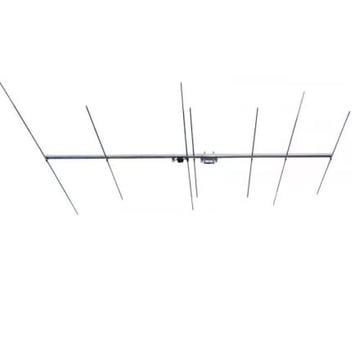
DUAL 50/70MHz Dualband 15-Element (7/8) Yagi With 7/16 DIN CON Dual Antennas£999.99833 Loyalty Watts




With over forty years of experience behind us, Moonraker is committed to providing our customers with only the best products available. We offer a wide range of antennas sourced from around the world to provide you with the best options to enable you to optimise your amateur radio experience. Whether you're a hardened veteran or a beginner, we’re certain we'll have something to suit you!
We possess one of the largest ‘in-stock' product ranges available and deliver worldwide. We’re a leading provider of amateur radios, antennas, transceivers, and communications products. You can expect exceptional service and fast delivery times. Our products reach customers in Europe, Asia, Canada, Australia and the United States. If you encounter any issues, our dedicated customer service team is there to help.
One of our widest ranges of products is our selection of amateur ham radio antennas. If you want to improve your amateur set-up, browse our collection for inspiration. We have options from the leading brands that will help you to acheive crystal-clear transmission and reception.
What are Amateur Ham Radio Antennas?
Amateur ham radio antennas are necessary for any amateur radio enthusiast's arsenal. They work with your radio to transmit and receive signals. Upgrading your antenna can boost the distance your device can transmit and receive communications. With a suitable antenna, you can completely alter the performance of your radio for the better.
However, knowing which radio antenna to go for is a different matter. Don't worry; we're here to help. With our quick guide to the various kinds listed below, you'll be an expert in no time.
Types of Amateur Ham Radio Antennas
Dipole Antennas
One of the simpler and most reliable designs, dipoles are renowned for their efficiency. Their design consists of two conductors of equal length with the feedline connected between them.
Beam Antennas (Yagi, Quad, etc.)
Most often found in cell phone towers, they are primarily used for beamforming when transmitting and receiving. Beamforming is the term used to describe signal guidance to ensure it goes in the right direction.
Loop Antennas
As their name suggests, loop antennas look like perfect loops or coils. They are low-cost but high in versatility.
Wire Antennas (End-Fed, Inverted V, etc.)
The most common applications for these are long, medium, and short-wave bands. They are generally best paired with outdoor or emergency transmitting stations.
Vertical Antennas
Thanks to their upright stance, vertical designs work better at low heights. You can still achieve a powerful signal without hoisting it up high.
Mobile and Portable Antennas
Mobile and portable setups are ideal for amateur radio enthusiasts who like to transmit and receive on the move. They're lightweight while remaining completely efficient.
Handheld and QRP Antennas
Similarly to mobile and portable antennas, these devices are perfect for radio enthusiasts on the go. They use much less power than their larger counterparts but still offer reliable communication.
Satellite and VHF/UHF Antennas
VHF and UHF stand for ‘very high frequency’ and ‘ultra high frequency’, respectively. They are ideal for two-way radio and commercial communications.
Long Range
Long-range is the way to go if you want to improve your radio's reach. These antennas increase your gain significantly.
Attic or Loft Antenna
Subtle yet effective, attic antennas attach to the underside of your roof. They often perform much better than indoor antennas.
FAQs
How do I choose the right amateur antenna for ham radio?
The four key factors when making this decision are cost, available space, performance efficiency, and durability. The right amateur antenna for you is the one that most accurately suits your needs. Don't just go for what sounds the best; consider your specific requirements.
What size antenna do I need for a ham radio?
Keep in mind the taller the antenna, the more gain you will receive. The ideal size also depends on your proximity to a repeater - repeaters will bounce your signal on further for you.
How can I improve the performance of my amateur ham radio antenna?
The elevation is critical to the performance, so move your antenna to a higher position wherever possible if you're getting interference. You could also try increasing the power directed to your antenna with accessories such as an amplifier to improve its outreach.
What is the difference between directional and omnidirectional antennas?
Directional antennas receive signals from one specific direction, whereas omnidirectional antennas receive signals from all directions. Directional is best if you want more gain, while omnidirectional works best for broader coverage.
What are some tips for installing and maintaining amateur ham radio antennas?
Installation varies widely depending on the kind of antenna you've purchased. Maintenance, however, remains similar amongst all devices. You should get into the habit of checking the wires' integrity and the antenna's positioning. If they show any signs of damage or wear, or if your antenna has slipped, this could significantly impact its performance.